
 Skip to content
 Not sure what to expect from therapy? The therapy FAQs break down the most common questions about individual and couples counseling, click any question to learn more.
Individual sessions: $160 per 50 minutes, $230 per 90 minutes.
Couples sessions: $300 for Intake sessions and $240 per 90 minutes. I believe 90-minute sessions are necessary for couples to fully explore their stories and work effectively on their relationship.
If cost is a barrier, please reach out. I offer a sliding scale to ensure everyone can benefit from the support they need.
I do not accept insurance. However, if your plan includes out-of-network (OON) benefits, I can provide a superbill for potential reimbursement.
A superbill is a detailed invoice that includes provider and patient information, diagnosis codes, procedure codes, and the cost of services. You can submit it to your insurance company for potential reimbursement under your out-of-network benefits.
I offer a sliding scale for clients who need it. Reach out and we’ll have an honest conversation about what’s manageable. If my practice isn’t the right fit financially, I’m happy to recommend St. Louis area community mental health resources.
Click ‘Begin Now’ at the top of any page to access my scheduling portal, or contact me directly at raber@luminous-therapy.com or 314-266-9188.
Come with an open mind and a willingness to share what brought you here. It can help to think ahead about specific concerns you’d like to address, but you don’t need a polished list. For couples, it’s useful to talk briefly with your partner beforehand about shared goals.
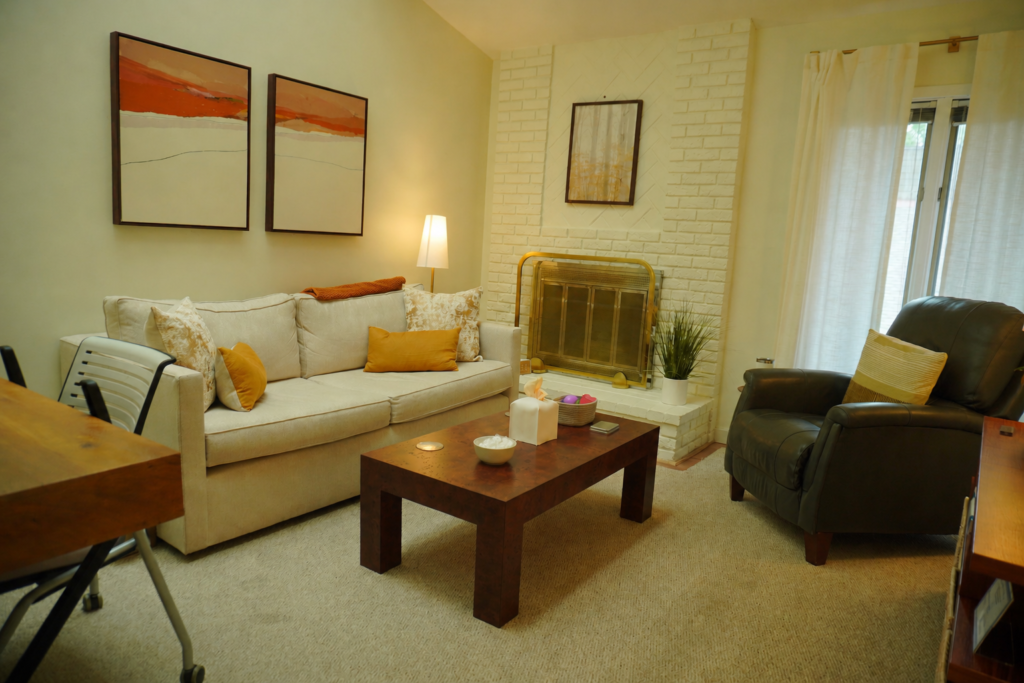
I offer both virtual and in-person sessions. Virtual sessions are conducted via a HIPAA-compliant telehealth platform to ensure confidentiality and security. In-person sessions are held at 3 The Pines Ct. St. Louis, MO 63141.
Yes, and finding the right fit matters enormously. If we work together for a few sessions and it doesn’t feel right, I’d rather you find someone who clicks than stay out of obligation. I’m happy to provide referrals.
I primarily use the Internal Family Systems (IFS) model, focusing on the 8 Cs: Curiosity, Calm, Compassion, Clarity, Creativity, Courage, Confidence, and Connectedness. I also incorporate other evidence-based practices, including the Gottman Method for couples, to tailor the therapy to your unique needs.
Individual sessions are 50 minutes. Couples sessions are 90 minutes, I find the longer format gives couples enough room to actually do meaningful work rather than rushing.
Most clients start weekly because the research shows that’s the most impactful frequency. As you progress, we’ll adjust. My goal is to graduate you from therapy as soon as you’re ready, not to keep you in it.
Some clients see meaningful change in a few months; others work with me longer for deeper or more complex issues.
Yes, with limited exceptions required by law: imminent risk of harm to yourself or others, suspicion of child or elder abuse, or a court order. We’ll go over confidentiality and its limits in our first session.
If you’re navigating something internal, anxiety, depression, trauma, identity, life transitions, individual therapy is usually the right starting point. If the core issue is between you and a partner, communication breakdowns, recurring conflict, infidelity, intimacy, couples therapy is the better fit.
If you’re not sure, I’m happy to talk it through in a brief consultation.
It’s common. Sometimes the most useful thing is for the willing partner to start individual therapy first, that often shifts the dynamic at home and can make couples therapy more accessible later. I’m happy to talk about whichever path fits your situation.
Yes. Therapy isn’t only about saving relationships, it’s about making informed, considered decisions. Whether the work leads to reconnection, a thoughtful separation, or clarity about which way to go, having a guide for that process matters.
Therapy isn’t designed for emergencies. If you’re in immediate crisis, call or text 988 (Suicide & Crisis Lifeline), call 911, or go to your nearest emergency room. For Missouri-specific support, you can also reach Behavioral Health Response (BHR) at 1-800-811-4760.
 Optimized by Seraphinite Accelerator