

The text sits unanswered for an hour and your mind writes a whole story about it. You replay the conversation from last night looking for the moment you said too much. You know, logically, that your partner loves you, and some deeper alarm doesn’t believe it for a second, so you check, and ask, and reach, and then worry that the checking itself is pushing them away.
That alarm has a name: anxious attachment style. I’m Raber, a therapist in St. Louis, and I want to explain it the way I would across from you in my office, what it is, the signs, where it comes from, what it does inside relationships, and how it genuinely settles. With a nervous system that slowly learns the thing it never got to learn: that love can be steady.
What Is Anxious Attachment?
Attachment research, which began with infants and caregivers and now spans decades of adult studies, describes the strategies we learn for handling closeness. If comfort came reliably when you reached for it, your system learned security. If comfort came sometimes, warm one day, distracted or overwhelmed the next, your system learned something more complicated: love is real but unreliable, so watch it closely. Turn up the sensitivity. Never stop monitoring. That’s the anxious strategy, sometimes called anxious-preoccupied attachment in adults. It is one of four attachment patterns, and I have written a guide to each of the others: avoidant attachment, disorganized attachment, and secure attachment.
Before anything else, two framings that change how this whole topic feels.
First, it’s a tendency, not a type, measured by researchers as a dimension you carry more or less of, which shifts across relationships and time. You might run anxious with a distant partner and nearly secure with a steady one, because the pattern is partly a response to what’s across from you.”I’m an anxious person” turns a pattern into an identity. “My attachment system runs hot under uncertainty” describes a state, and states can change.
Second, anxious attachment is a sensitivity, and sensitivities cut both ways. The same wiring that spirals over an unread text also makes you attentive, devoted, quick to read a room, and be generous with love. The goal of healing is to suffer less while caring all the same.
Signs of Anxious Attachment in Adults
The pattern tends to look like this:
- A fast alarm. Small signals of distance, a short reply, a changed tone, a canceled plan, register as emergencies before thought gets a vote.
- Reassurance that doesn’t stick. “Of course I love you” calms you for an hour, then the question quietly reopens.
- Monitoring. Read receipts, response times, their mood on arrival: you track data other people don’t notice they’re generating.
- Difficulty with space. A partner’s ordinary need for solitude can feel like rejection wearing a polite mask.
- Losing yourself in the relationship. Your plans, preferences, and even opinions bend toward keeping the connection warm, a slow erosion that is also a boundaries story.
- Protest when the alarm peaks. Double texts, pointed silence, jealousy tests, picking a fight just to feel contact, what researchers call protest behavior, and what it really is: a bid for connection written in alarm language.
- Post-conflict rumination. After a fight, you replay your own words for hours, hunting for the sentence that broke everything.
If that list feels like being seen through a window, keep reading. None of it is neediness as a character flaw. All of it is a smoke alarm doing the job it was trained for.
What Causes Anxious Attachment?
Usually, inconsistency. A caregiver who was loving but unpredictable, warm when calm, absent when stressed, teaches a child that connection exists but can’t be counted on. The child’s brilliant adaptation: stay vigilant, amplify the signal, cling when you have it. Some anxious leaners grew up with a parent whose own distress kept switching the roles, so the child learned to manage someone else’s feelings to keep the household weather safe. Others learned that being easy got them overlooked, and being loud got them held.
The usual caveats matter here. Continuity from childhood into adult love is modest, later relationships keep reshaping the pattern, and this is an explanation, not an indictment of your parents. The point of the origin story is one word: learned. Learned strategies can be updated by new experience, and that’s the entire basis of healing.
Anxious Attachment in Relationships
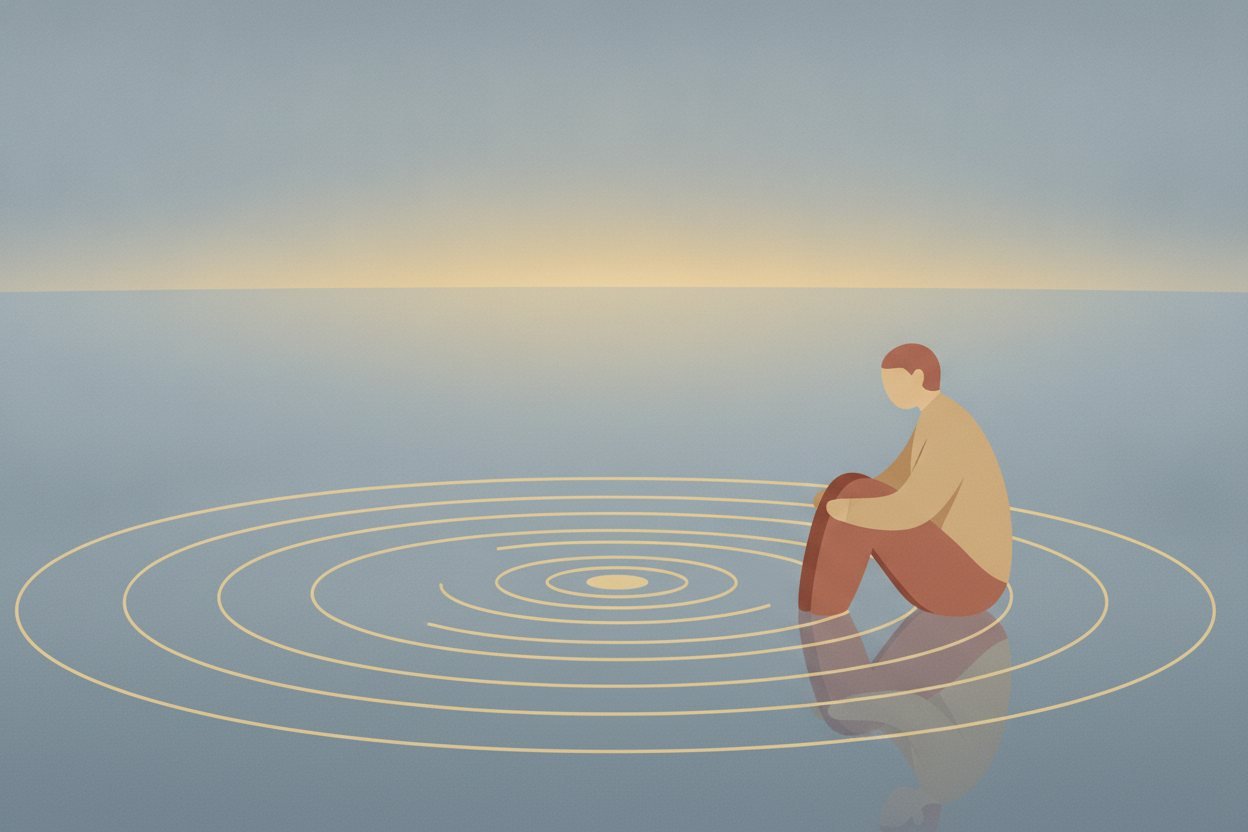
Here’s the painful mechanics. When the alarm fires, the anxious system deploys hyperactivating strategies, moves that turn the connection volume up: reaching, checking, protesting, escalating until reassurance arrives. Sometimes it works. But with a partner who needs space to regulate, especially an avoidant leaner, it backfires in a specific, predictable way: your pursuit triggers their retreat, and their retreat triggers your louder pursuit. That loop is so common it has its own guide on this site: the anxious-avoidant relationship.
The alarm also distorts conflict. Fear tends to exit your mouth dressed as criticism, “you never make time for me” is terror wearing armor, and criticism invites defensiveness, the opening moves of the four horsemen pattern that erodes couples over time. And when reassurance is used as the only regulation tool, partners can start to feel like a full-time answer to a question that never closes, which is exhausting on both sides of it.
None of this means you’re too much. It means the need is arriving in a form that’s hard to answer. Underneath every protest behavior I’ve ever seen in my office is the same clean, legitimate question: are you there for me? The work is learning to ask it in a way that can be answered.
Anxious Attachment Is Not “Being Clingy”
The internet’s shorthand for this pattern is cruel and inaccurate. Clinginess implies a character defect. What’s actually happening is a nervous system doing threat detection with settings calibrated in childhood, under conditions where vigilance was rational. Calling it neediness is like calling a smoke alarm dramatic; the alarm is doing exactly what it was built for, in a house that no longer requires it.
The same correction applies to the self-blame that anxious leaners carry. Most have been told, by partners, by culture, sometimes by unhelpful therapy, that they need to need less. The research points somewhere kinder: anxious attachment settles not when the need shrinks but when it starts getting met reliably, by a steadier partner, by therapy, and increasingly by you, becoming someone your own nervous system can count on.
How to Heal Anxious Attachment
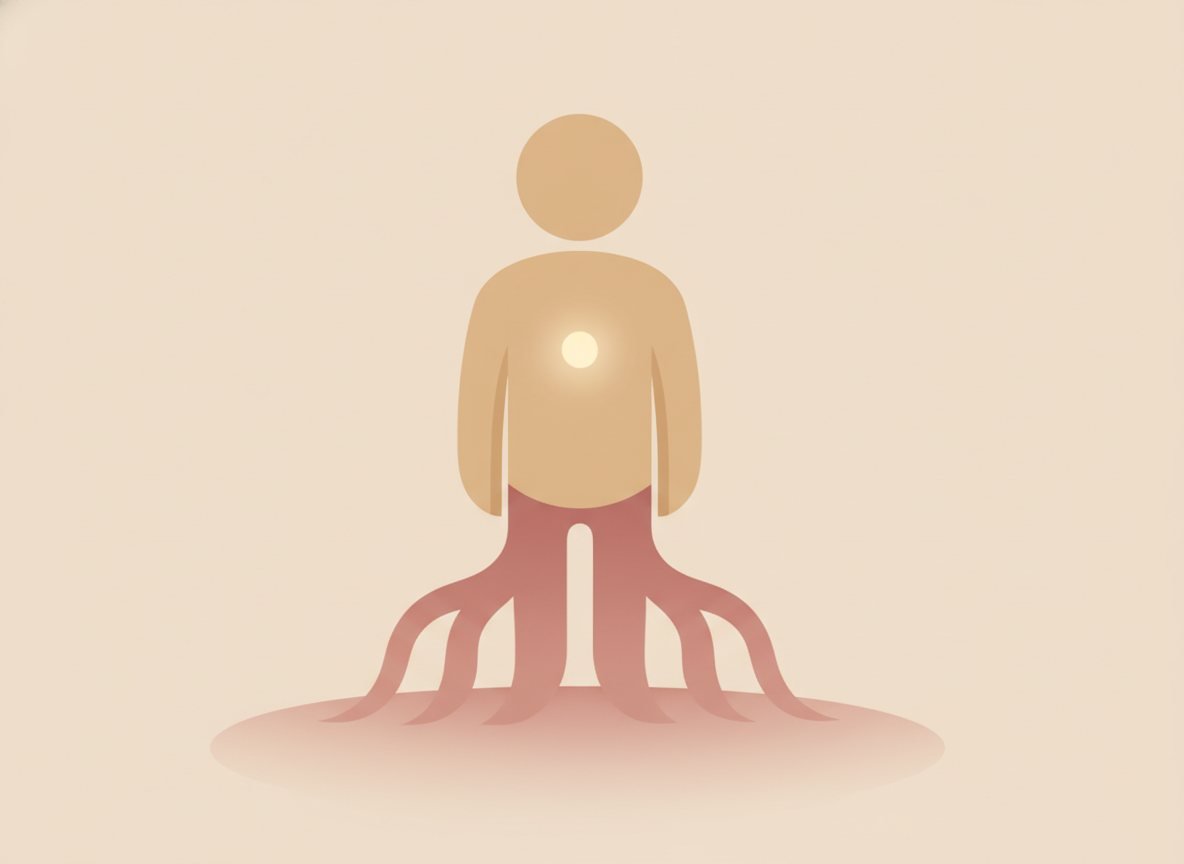
The honest headline mirrors the avoidant one: security can be built in adulthood. Researchers call it earned security, and it comes from repeated experiences of the alarm firing and the world turning out okay anyway. Here’s the shape of the work.
Learn to catch the alarm before you act on it. The window between feeling the spike and acting on it is where everything changes. Practice naming it in the moment: my attachment system just fired; that’s the old alarm, not necessarily tonight’s facts. You don’t have to believe it fully. Naming alone slows the cascade.
Give the alarm a first responder that isn’t your partner. The spike needs an answer, and if your partner is the only answer, every wobble in their availability becomes a crisis. Build a small kit: a walk, a long exhale with a slow count, a friend you text about anything else, a note on your phone that says the thing you need to hear. This isn’t self-sufficiency as a wall, like the avoidant version. It’s a bridge that carries you the twenty minutes until connection is available again.
Convert protest into a plain request. Under “why didn’t you answer me” is “I got scared we were drifting and I need to know we’re okay.” One starts a fight; the other can be answered in ten seconds. This single conversion, practiced for a month, changes more relationships than any technique I know.
Let the steady moments in. Anxious systems are built to scan for threat, which means the reassuring data often doesn’t get filed. When your partner shows up, comes back, keeps the promise, pause a beat and let it register. Earned security is built exactly there, in the deliberate noticing of reliability the alarm was trained to ignore.
Consider therapy, especially if the alarm is old and loud. A steady therapeutic relationship is a practice field where reaching gets met, reliably, week after week, and in my office we often use Internal Family Systems to work with the vigilant part directly: it’s a protector, usually guarding a much younger part who learned love could vanish. Protectors soften when the thing they guard finally gets cared for. That’s the deeper work of individual therapy, and where the roots reach into frightening early experiences, trauma therapy is often the truer door. If the pattern is playing out live in your relationship, couples work helps both partners change the loop together.
Questions People Ask About Anxious Attachment
Why do I get clingy when my partner pulls away?
Because your attachment system reads distance as danger and responds by closing it, that’s the hyperactivating strategy doing its job. The pull toward pursuit is strongest exactly when pursuing helps least. Building a between-you-and-them regulation kit gives the alarm somewhere to go besides your partner.
Can anxious attachment become secure?
Yes. Attachment isn’t fixed, and the direction of change is well studied: repeated experiences of reliability, from a steady partner, a therapist, and your own self-responsiveness, gradually retrain the alarm. Most people keep a trace of the lean under high stress, and it stops running their relationships.
Is anxious attachment the same as anxiety?
They’re related and distinct. Anxious attachment is specifically about closeness and abandonment; generalized anxiety spreads across many domains. They often travel together, and each deserves its own attention. A therapist can help you tell where one ends and the other begins.
What triggers anxious attachment?
Ambiguity, mostly: unanswered messages, changed tones, canceled plans, a partner who’s present but distracted, and any real signal of distance. Stress lowers the alarm’s threshold, which is why hard seasons make the pattern louder even in good relationships.
Should someone with anxious attachment date an avoidant partner?
There’s no rule against it, and the pairing is genuinely harder because each partner’s coping triggers the other’s wound. It can work well when both people can see the loop and own their half. If that’s your relationship, the anxious-avoidant guide above walks through exactly how.
A Last Word for the Ones Who Love Loudly
This article is for learning, not a diagnosis, and no article can promise an outcome. But if you found yourself in it, take this with you: the depth of your need was never the problem. You learned to love with the volume up because somewhere, once, quiet love got lost in the noise. The work now isn’t to become someone who needs less. It’s to become someone whose needs get met, starting with the way you meet your own.
If you’d like steady company for that, I’d be glad to meet you, in person in St. Louis or online anywhere in Missouri. You can request an appointment whenever you’re ready. Steadiness is learnable, and you don’t have to learn it alone.